Do you know that feeling of being stuck? Not just confused or lost, but actually stuck. You can see where you want to be. You might even have a good idea of how to get there. But something is holding you back. And the strange thing is, it doesn't feel so much like a barrier that you need to cross; it feels more like a weight pressing down on you, like you are really heavy and gravity is pinning you to the ground.
People often experience this as a feeling of paralysis, and can struggle with the sense that something is wrong with them. Not enough willpower. Not enough courage. Not enough something. But what if nothing is wrong with you at all? What if that heaviness, that paralysis, is actually a well understood phenomenon that shows up everywhere in nature, from chemistry to psychology? What if you're not broken?
Let me explain. This experience is so common, so universal, that scientists actually have a name for it. They call it a metastable state, which describes a system that has settled into a temporarily stable state; it's holding steady, but there are more optimal energy states available if only it had enough energy to "get over the hump" holding it back. It's sitting in a shallow energy well that can feel permanent but it's not. The system needs a specific amount of energy, called the activation energy, to get over the hump and descend to a new, more stable energy state.
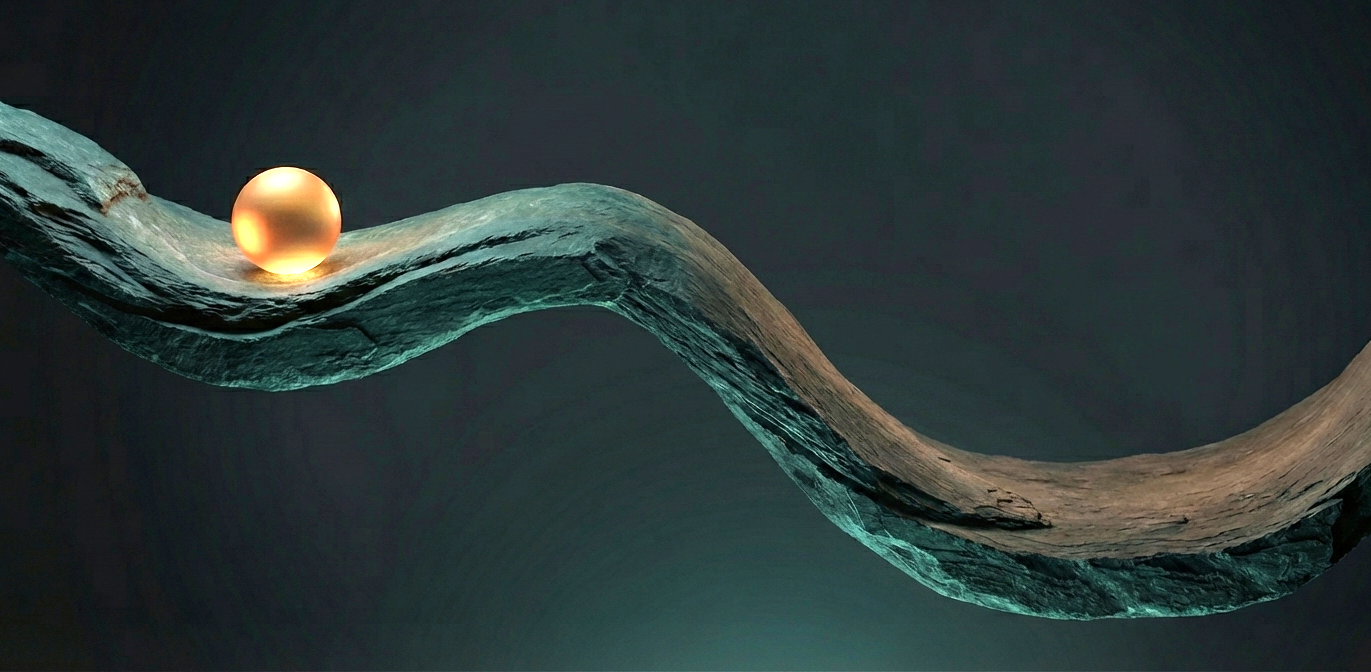
Picture a ball sitting in a shallow well partway up a slope. There's a ridge between the ball and a much deeper, more comfortable valley below. You're the ball. The little well you're sitting in is your current life; your habits, your routines, the identity you've built around who you are right now. It's not a great spot but it's more or less stable, and you've been there long enough that leaving feels a bit challenging. The valley below is where you'd actually thrive, a better configuration, a more authentic version of your life. And that rim between where you are and where you could be? That's the heaviness you feel. That's the paralysis. It's real, it's measurable, and it has nothing to do with your character.
The rim is what makes it hard. To get to that better place, you must go uphill first. You must push through a zone where things temporarily feel worse, more uncertain, more uncomfortable, before they get better. And if nobody ever told you that was normal, if nobody ever said "hey, this is just how change works, the discomfort is part of the process," then of course you're going to interpret that resistance as a sign you should stop.
Here is the part that gives me hope, and it's the reason I wanted to write this. There are really only three ways anything in nature gets out of a metastable state.
The first is shock. Something hits the system so hard that it just blasts right over the rim. In a human life that might be the heart attack, the layoff, the phone call in the middle of the night. It works, but it's brutal, and you don't get to choose what you look like on the other side.
The second is slow, gentle change. This is what happens when you give a system just enough energy, consistently, over time, that it gradually finds its way to a better place. In life, this is the quiet work that looks like meditation, breathing practices, journaling, or paying attention to your dreams. Sitting with the uncomfortable parts of yourself long enough that they start to soften. It's not dramatic, and nobody writes a movie about it. But it's a common way for real, lasting change to happen.
The third is the hardest and maybe the most relevant right now. It's what happens when the pressure doesn't let up, when you can't pause and take a retreat and work on yourself in peace because the world keeps pushing. In that situation, something remarkable happens. You start adapting on the fly. You try small things. A new hobby. A conversation that shifts your perspective. Sitting down with an AI tool and discovering you can build something you couldn't build last month. A moment where you surprise yourself by handling something differently than you would have a year ago. None of it feels like progress at the time, but six months later you look back and realize you're not the same person you were, not because of some dramatic breakthrough but because a hundred small adjustments added up into something real.
I think many of us are in that third situation right now, whether we realize it or not. The world is changing fast, and it's not going to slow down so we can catch our breath. But what encourages me is that this type of change repeatedly works in nature. Systems under stress generally don't break but instead reorganize. And what determines the outcome isn't how strong you are or how smart you are. It's how willing you are to let the reorganization happen instead of fighting it.
That rim around your metastable energy well might feel enormous from the inside; it almost always does. But it's a hill, not a wall — and one you can climb without blowing up your life. Once you're over the rim, you don't have to push anymore. It feels less like achievement and more like arrival, the wind at your back as you settle into a more stable version of your life. And when you're ready, you'll notice the next rim on the horizon — because that's how growth works. There's always a new challenge ahead.